KB451407 – Creating a Linux user using Houston Identities
Last updated October 27, 2026
Scope/Description
- This article details the process of creating a Linux user and assigning it a group through the Houston cockpit-identities module.
Prerequisites
- Houston Installed and Accessible
- Identities Module installed
Steps
Creating a Linux User
- Once Identities has been installed, you can open the module on Houston. The module opens on the Login History tab by default.

- Click the 'Users' tab, this will open a page with a list of users. Select "New User".

- Fill in the Username, Full Name/Description. The Home Directory is auto-populated from the username, and the Login Shell defaults to Bash (/bin/bash). Then click "Apply". It is also possible to assign this new user to a group in the Groups section at the bottom of the form. If applicable it can be done here, or a user can be assigned at a later time.

- A prompt will come up to set the user's password. This is a local Linux password, it can be used to SSH into the machine, or to authenticate to Houston. Note the password policy shown in the prompt: at least one lowercase letter, one uppercase letter, one number, one special character, and a minimum of 8 characters.

- The user generation will complete successfully. The user should now be able to authenticate to Houston or SSH with that password. The below sections will detail assigning a user to a specific group, and setting an SMB password if applicable.

Assigning a Linux Group to a User
- In the "Users" section the new user should be seen. Click on the user to assign a group.

- Click on the "+" icon under the Groups section.

- A dropdown will popup and you can now select a group to assign to the user. The dropdown lists all groups on the system. In this example the new user is assigned to the "sambashare" group, the Samba-related group on this unit.

- The newly added group should be displayed under the Groups section. Click "Apply" to save changes.

Configuring a Samba Password for a User
- Select the user you wish to assign a Samba password. The Samba password will need to be set to allow users to authenticate to Samba shares. It can be the same as the Linux password, but does not have to be. Click on "Set Samba Password".

- Enter a password and click "Apply". Once set, the Samba section shows "Change Samba Password" and "Remove Samba Password" instead of "Set Samba Password".

Verification
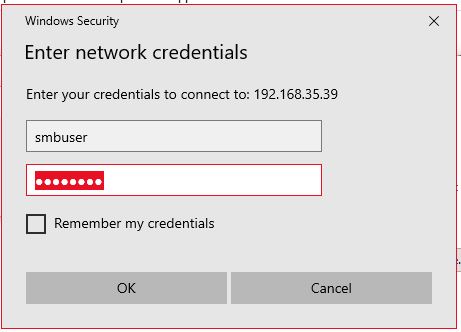
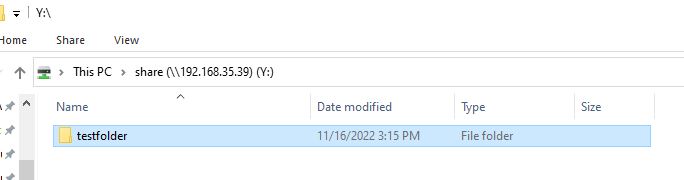
- Map a Samba share using the user you created earlier. This unit exports the "ubuzfs" and "storage" shares. If a share restricts access to a group, the new user must be a member of that group (the Samba-related group on this unit is "sambashare"). The screenshots below show mapping a Samba share from a Windows client with the new user's credentials.
Troubleshooting
- Check that the share definition is correct and that there are no permission errors.
- Use a command like testparm -s or net conf list to see share details. The output below shows the share definitions on this unit.

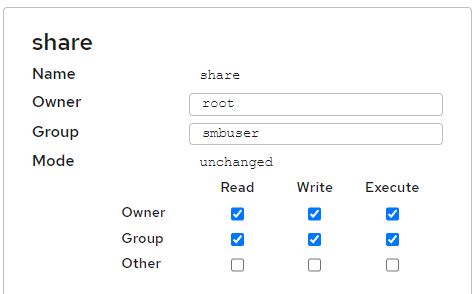
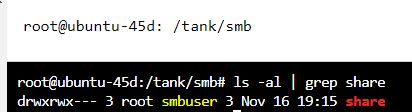
- Check that the share folder permissions are correct. You can change them when editing the share, through the terminal, or in the Houston Navigator tab.